
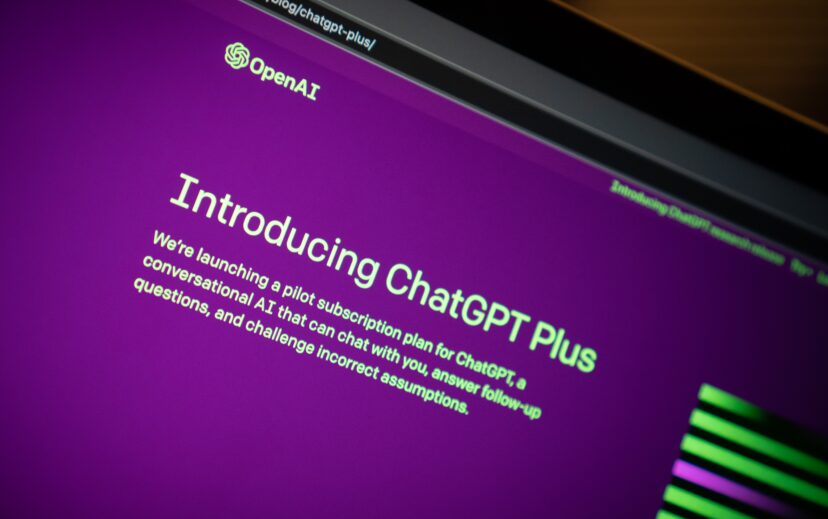

ChatGPT has dominated the generative AI space since its roll out in 2022. Its learning capabilities allow users to engage in a human-like manner, meaning that it can answer follow-up questions, suggest additional answers, and even converse with users, in their newer voice transcription model. In 2026, ChatGPT 5.5 has rolled out with stronger Thinking and Instant variants, alongside its new “Health” area for conversations with your connected health data. They also added a unified app ecosystem for seamless integration with programs such as Notion and Google Drive. While generative AI has opened the door for integrated daily use, ChatGPT users should be aware of how the model operates and understand the data privacy risks of inputting any confidential information into the platform.
How does ChatGPT work?
ChatGPT was created by OpenAI and launched online on November 30, 2022. Like other large language models, ChatGPT is a generative AI model that uses vast amounts of real data from the internet to respond to user queries. When you input a question or comment to ChatGPT, the program will generate a response by predicting the next word in the conversation. ChatGPT makes this ‘prediction’ by assigning a probability distribution over the vocabulary for the next word and selecting the most likely one as the next word in the response. Since its launch in 2022, other complex predictive language software have arisen, such as Perplexity, Claud, Microsoft Co-Pilot, and Google Gemini. Chat GPT has popularized this genre of AI software and is synonymous with the conversational AI model to this day.
What can ChatGPT do?
ChatGPT has an extremely broad functionality. Examples of its capabilities include:
- Transcribe content in different languages
- Write essays on almost any topic in a variety of tones
- Aid in SEO research by giving keywords to related topics
- Converse with users with the voice transcription feature
- Draft Resumes
- Use as a thinking partner
- Solve math problems
- Organize to-do lists/scrambled notes
What data does ChatGPT collect?
ChatGPT is a recursive model, meaning it learns and adapts its inputs after every prompt; it saves all data entered by users and all data produced by ChatGPT in response. ChatGPT also collects user IP addresses, browser types and settings, and data on user interactions. Additionally, ChatGPT automatically receives the following information when you use its platform:
- Log data
- IP address
- Browser type and settings
- Date and time of request
- How you interacted with the site
- Usage data
- Types of content viewed and engaged with
- Features used and actions taken
- Time zone, country, date/time of access
- Type of computer/mobile device
- Device information
- Name of device
- Operating system
- Browser used
What are the data privacy risks associated with ChatGPT?
You should not enter confidential information into ChatGPT because it saves all user inputs. Anything you type into ChatGPT may be saved and possibly used when generating responses for other users. Drafting optimized resumes is a common task people use ChatGPT for, but information such as your address, phone number, and email should be removed. The same is true of confidential workplace information, such as client/patient information, internal reports, trade secrets, and employee information. If any of these apply to your situation, do not enter it into the platform; it may breach your obligation to protect the confidentiality of that information.
Is there a way to safeguard the data I enter into ChatGPT?
While it is advisable not to enter confidential information into ChatGPT, there is a feature that allows you to disable your ChatGPT history, so your conversations aren’t used to train its model. To opt out, enter ChatGPT and:
- Choose Settings from the menu
- Click to Data Controls to expand the window
- Toggle the switch next to “Improve the Model for Everyone”
Remember, opting out will not protect your confidential information, so be advised not to enter any sensitive information into ChatGPT. OpenAI will still store your conversations with ChatGPT for 30 days and review those transcripts, even if you turned off your chat history. For this reason, make sure to delete or ‘anonymize’ any sensitive information (change names, addresses, financial information, etc.) before putting it into ChatGPT.
Conclusion
As ChatGPT is transforming our day-to-day lives, it is important to remember that there are serious risks associated with entering confidential information into the platform. If you are unsure about your responsibilities with respect to confidentiality, speak with a member of our team for next steps.
Contribution to this blog by Anastasia Pedraza